The short version
- A healthy diet is adequate, balanced, moderate and diverse, in the words of the World Health Organization.
- Vegetables and fruit should make up the largest share of what you eat: at least 400 grams, or five portions, a day.
- Choose wholegrain or higher-fibre starchy foods, include some protein, and prefer unsaturated fats.
- Keep free sugars below 10% of your energy and salt below 5 grams a day.
- You are aiming for balance across the week. No single meal has to be perfect.
"Eat a balanced diet" may be the most repeated piece of health advice there is, and one of the least explained. Balanced between what? Measured how?
The good news is that the major dietary guidelines agree with each other far more than the headlines suggest. This guide brings together what the World Health Organization (WHO) and the national food guides of the United Kingdom, Canada and Australia have in common, and turns it into something you can use at the next meal.
What "balanced" actually means
The WHO describes a healthy diet using four principles:
- Adequacy. It gives you enough of the nutrients you need, without going over.
- Balance. The energy you take in matches the energy you use, with a sensible mix of carbohydrate, protein and fat.
- Moderation. It limits the things that harm health in excess.
- Diversity. It includes a wide variety of foods within and across food groups.
The WHO also points out that the exact make-up of a healthy diet varies with age, activity, culture and the foods available locally. There is no single correct menu. The principles stay the same; the dishes do not have to.
The food groups, and how much of each
Vegetables and fruit: the largest share
Every major guideline puts vegetables and fruit first. The WHO advises at least 400 grams a day for everyone over the age of 10. In the United Kingdom that is expressed as at least five portions a day, and the NHS Eatwell Guide says fruit and vegetables should make up just over a third of what we eat.
Fresh, frozen, tinned and dried all count. Frozen and tinned are good choices as long as they do not come with added sugar or a lot of salt. Fruit juice counts once at most: in the UK the advice is to limit juice and smoothies to a combined 150 millilitres a day, because of the sugar they contain.
Variety matters as much as quantity. Different colours and types bring different vitamins, minerals and kinds of fibre.
Starchy foods: choose the higher-fibre versions
Potatoes, bread, rice, pasta, oats and other grains are the body's main source of energy. The Eatwell Guide suggests they make up just over a third of the diet, and that you choose wholegrain or higher-fibre varieties where you can: wholemeal bread, brown rice, wholewheat pasta, oats, or potatoes with their skins on.
The WHO recommends at least 25 grams of fibre a day for everyone over 10, from foods and not from supplements. Whole grains, pulses, vegetables and fruit are the main sources.
Protein: a smaller share than most people expect
Beans, lentils, chickpeas, fish, eggs, meat, nuts and soya products all supply protein. According to the WHO, protein providing 10 to 15% of daily energy is generally enough to meet an adult's needs. For someone eating about 2,000 calories a day, that is roughly 50 to 75 grams.
Two points recur across the guidelines:
- Eat more beans and pulses. They are low in fat and a good source of fibre as well as protein.
- Eat less red and processed meat. The NHS also suggests at least two portions of fish a week, one of them oily, such as salmon, sardines or mackerel.
Dairy and alternatives
Milk, yoghurt and cheese supply protein and calcium. The usual advice is to choose lower-fat and lower-sugar versions. If you use plant-based alternatives, pick unsweetened ones that are fortified with calcium.
Fats: the type matters more than the total
Fat is an essential nutrient. The WHO advises that at least 15% of an adult's energy should come from fat, and that keeping total fat to 30% or less may help prevent unhealthy weight gain.
What matters most is the kind of fat. Unsaturated fats, found in fish, avocado, nuts and in olive, rapeseed (canola), sunflower and soybean oils, are preferable to saturated fats, found in fatty meat, butter, cream, cheese, ghee, lard, and palm and coconut oil. The WHO recommends that no more than 10% of energy come from saturated fat and no more than 1% from trans fat.
All fats are high in energy, so even the healthier ones are best used in small amounts.
What to keep in check
| What | Recommended limit for adults | Source |
|---|---|---|
| Free sugars | Less than 10% of daily energy, about 50 g at 2,000 calories; 5% or less is better still | WHO |
| Salt | Less than 5 g a day, about one level teaspoon | WHO |
| Saturated fat | No more than 10% of daily energy | WHO |
| Trans fat | No more than 1% of daily energy | WHO |
Free sugars are sugars added to food and drink, plus those naturally present in honey, syrups and fruit juice. The sugar in whole fruit and in plain milk does not count.
Salt is often hidden. In many countries much of the salt people eat comes from bought foods such as bread, processed meat, sauces and ready meals, not from the salt cellar. Checking labels can do more than putting the shaker away.
How it looks on a plate
National guides use slightly different pictures, but the picture is recognisably the same.
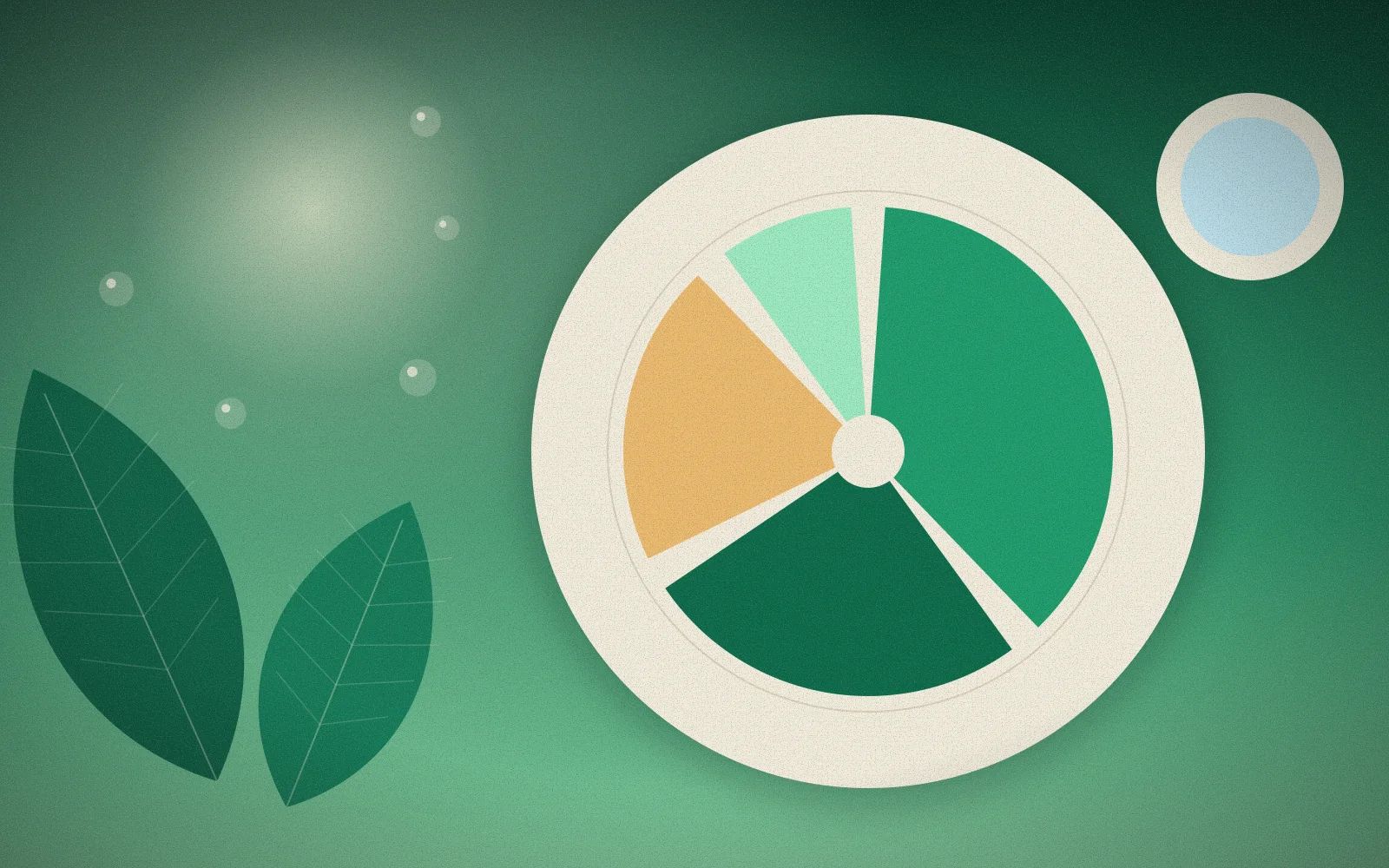
- The UK Eatwell Guide shows the proportions of the whole diet: just over a third vegetables and fruit, just over a third starchy foods, with smaller shares of protein foods and of dairy or alternatives.
- Canada's food guide uses a single plate: half of it vegetables and fruit, a quarter whole grain foods and a quarter protein foods. It adds a simple instruction: make water your drink of choice.
- The Australian Guide to Healthy Eating groups foods into five groups and encourages a variety from each, every day.
Guidance is not identical everywhere, and it is revised from time to time. In the United States, for example, a new edition of the federal Dietary Guidelines for Americans was published in January 2026, replacing the MyPlate graphic that had been in use since 2011. If you want the detail, read the current advice for the country you live in.
A workable rule that fits the plate models above:
- Fill half your plate with vegetables, salad or fruit.
- Fill a quarter with a wholegrain or other starchy food.
- Fill a quarter with a protein food, more often beans, fish or eggs than red or processed meat.
- Add a small amount of unsaturated oil or spread.
- Drink water with it.
Balance over days, not meals
The NHS makes a point that takes the pressure off: you do not need to achieve this balance at every meal. Aim to get it right over a day, or even a week.
That means a meal out, a slice of birthday cake or a takeaway on Friday does not undo anything. Nor does it need to be "earned" or compensated for. What counts is the general shape of what you eat, most of the time.
It also means there are no forbidden foods. Biscuits, crisps, sweets and sugary drinks sit outside the main food groups because the body does not need them. They can be eaten less often and in small amounts.
Where to start
If all of this feels like a lot, pick one change. Adding a portion of vegetables to your main meal, switching to wholegrain bread, or swapping one sugary drink a day for water are each worthwhile by themselves. Healthy eating for beginners sets out a gentle order in which to make changes, and Hydration: how much water do you really need? covers what to drink.
References
- Healthy diet (fact sheet). World Health Organization.
- Sodium reduction (fact sheet). World Health Organization.
- The Eatwell Guide. NHS.
- Canada's food guide. Government of Canada.
- Dietary Guidelines for Americans. US Department of Agriculture and US Department of Health and Human Services.
- Australian Guide to Healthy Eating. Australian Government, National Health and Medical Research Council.
Written by
The Diurna editorial team researches and writes each guide, working from public-health guidance and peer-reviewed research.